What Is Active Fuel Management? GM's System Explained in Full
What is Active Fuel Management? It is General Motors' cylinder deactivation technology. When full power output is not required, the technology allows a V8 engine to run on only four cylinders. Its goal is to achieve better fuel economy without sacrificing vehicle performance.
In this article, we provide a detailed analysis of the system, including where the idea came from, how GM implemented it, which engines carry it, and why it developed the reputation among owners.
The Idea Behind Active Fuel Management
In fact, large engines are inefficient at light load. When a V8 engine cruises on a flat highway, its power output is far below its maximum capacity. Furthermore, the pumping losses incurred in drawing air through eight cylinders—some of which do not need to operate at that moment, represent a waste of energy.
The obvious solution is to use a smaller engine, but a smaller engine usually cannot tow a trailer or move a loaded truck up a grade. However, cylinder deactivation attempts to strike a balance: the economy of a smaller displacement when cruising, the full capability of the larger one when demanded.
The concept is not new. As early as 1981, Cadillac attempted to apply this technology in its V8-6-4 engine. But because of limitations in the electronics of the time, it finally became a cautionary tale. By the 2000s, changes in computing power and precision manufacturing made the idea workable in mass production.
How GM Implemented It
Active Fuel Management deactivates four cylinders (usually 1, 4, 6 and 7). They are chosen to keep the firing pattern of the remaining four relatively balanced.
The mechanism is located in the lifters. AFM engines use special lifters which contains spring-loaded locking pins. Under normal operation, the pin holds the lifter rigid so that camshaft motion passes through the pushrod to open the valve. When the ECU decides conditions are suitable for four-cylinder mode, it will energize solenoids in the valve lifter oil manifold to send pressurized oil to those four lifters. Finally, the oil pushes the pins out of engagement, then the lifter collapses telescopically, and finally the valve remains closed.
When the valves are closed and injectors are switched off, those cylinders will trap air and act as springs. However, there is little net energy loss during compressing and expanding. At this point, the engine runs on four cylinders, so the load on these cylinders is higher, and their operating efficiency is also greater.
What Is Active Fuel Management Doing at the Software Level?
Before deactivation is permitted, the ECU continuously evaluates coolant temperature, engine load, throttle position, vehicle speed and gear. It’s necessary that all conditions must be satisfied. This is precisely the decision that a plug-in disabler module interferes with. It keeps one condition outside the required window so the permission is never granted.
Which Vehicles Use Active Fuel Management
AFM was first introduced with the 2005 model year under the name "Displacement on Demand", which was used on 5.3L V8 applications. Then it was renamed Active Fuel Management shortly afterwards.
Full-size trucks adopted it widely with the GMT900 generation from the 2007 model year, and it carried through the K2XX generation to 2018. The Gen V EcoTec3 engines which were introduced in 2014 continued to use the technology.
That covers the Silverado 1500, Sierra 1500, Tahoe, Suburban, Yukon, Yukon XL and Escalade with 5.3L and 6.2L V8s across those years. From 2019, the T1XX platform's L84 and L87 engines started to use Dynamic Fuel Management instead.
Does It Actually Save Fuel?
Yes, although the actual results were not as obvious as the marketing had suggested at that time.
The saving depends entirely on how long the system operates in four-cylinder mode. It delivers real fuel-saving benefits during steady highway cruising under light loads; however, in stop-and-go city driving, there is little opportunity to engage this mode, and it is of no use whatsoever when towing a trailer
Owners who disable AFM usually report losing about one to two MPG on the highway, which roughly reflects the system's fuel-saving benefits in real-world use. For a vehicle that mostly runs errands around town, the difference is even smaller.
Why Active Fuel Management Has the Reputation It Does
The engineering is sound in principle. The challenge lies in the system's strict requirements for small precision components over a very long service life.
During every deactivation cycle, the locking pins must disengage and re-engage cleanly, with engine oil as the working fluid. The success or failure depends on whether oil pressure, oil cleanliness and oil viscosity are all within optimal ranges. As the number of operating cycles reaches the tens of thousands over years of service,, the margin for error narrows.
If a pin fails to re-lock properly, the lifter cannot follow its camshaft lobe correctly, resulting in accelerated wear on both. Once the lobe wears out, you need a camshaft replacement rather than a lifter replacement, so the repair cost climbs quickly.
This does not happen to every engine. In fact, many engines continue to run well without any failures even after 200,000 miles. But the failure is common enough and expensive enough, so an entire aftermarket exists to prevent the cycling from happening at all.
What Owners Can Do About It
The cheapest solution is a plug-in OBD-II module that prevents the ECU from commanding deactivation. Moreover, nothing is flashed or cut, and the factory state will recovered at once once the module is unplugged.
A custom tune removes deactivation from the calibration permanently. It is more expensive and detectable, but it does not occupy the diagnostic port and never disarms.
For a full delete plan, you can replace the camshaft and lifters, and block the oil manifold. Then the hardware can be removed entirely. It is most thorough solution, but also the most expensive by a wide margin. Moreover, it usually makes sense only as part of a repair that already has the engine apart.
None of these can repair existing damage. They are preventive measures, and their value lies in fitting one before a problem appears rather than after.
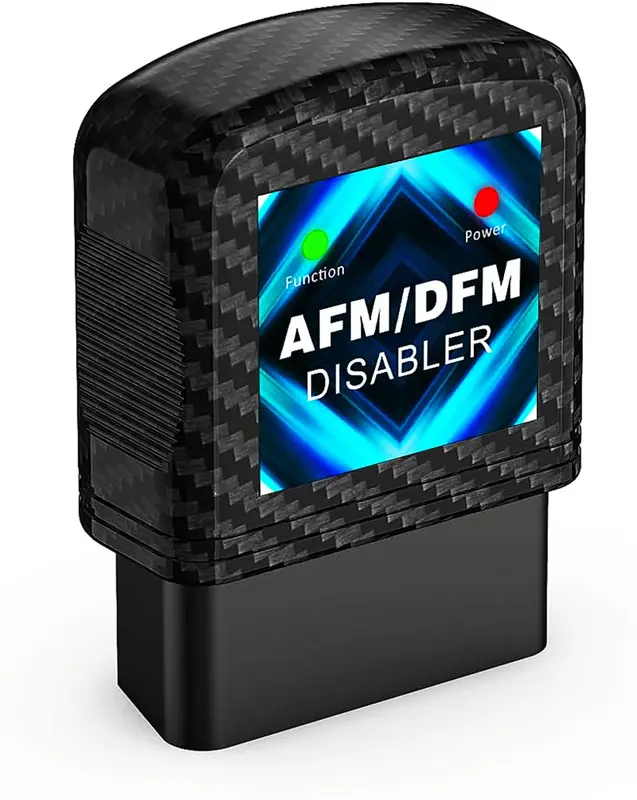
The inexpensive first step
Ropode AFM DFM Disabler — 5.3L Daily Driver Pick
Blocks the ECU from commanding four-cylinder mode, so the lifter cycling described above never happens. Reversible in seconds, and it closes no doors on a tune or delete later.
Buy on AmazonWe may earn commission from links in this article, at no extra cost to you.
Living With Active Fuel Management
For owners who decide to keep the system, here are a few maintenance habits which are more important than they would on a conventional engine.
Engine oil is critical. AFM uses engine oil as a control fluid, not just a lubricant. Therefore, viscosity, cleanliness and pressure all directly affect whether the locking pins can operate correctly. For vehicle owners, they should stick to the manufacturer's specified grade and keep change intervals conservative, which is the single most useful thing an owner can do.
Secondly, you need to pay attention to noise. If you can hear a new tick from the top of the engine, especially one that is louder during a cold start, you should check it immediately rather than waiting to see whether it disappears. If you can catch a lifter before it damages a camshaft lobe, you can avoid a major repair.
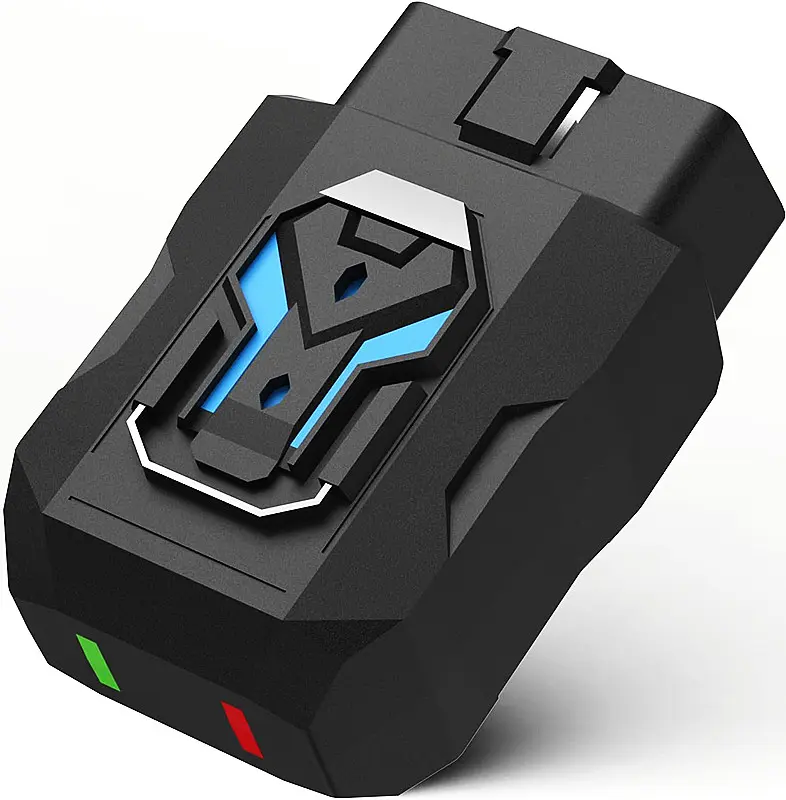
Auto re-arm version
Ropode AFM Disabler — Auto Re-Arm Option
Same preventive logic, but it re-engages on its own every time you start the truck — you never have to remember to arm it.
Buy on AmazonFrequently Asked Questions
What is Active Fuel Management on a Silverado?
It is GM's cylinder deactivation system, which runs the V8 on four cylinders during light-load cruising. On Silverado 1500s, this technology was used on 5.3L and 6.2L engines from about 2007 to 2018.
Can Active Fuel Management be turned off permanently?
Yes, you can turn it off permanently with a custom tune or a full mechanical delete. Also, a plug-in module can achieve the same practical result, which is totally reversible.
Does Active Fuel Management affect towing?
Hardly. Under load, the ECU keeps all eight cylinders active anyway, so deactivation rarely engages during towing.