How Does Active Fuel Management Work? The Mechanical Detail
How does Active Fuel Management work? At the component level, GM's AFM system uses oil pressure to shut down four cylinders to collapse specially designed lifters. As a result, the camshaft can rotate without opening those cylinders' valves.
In this article, we will walk through the hardware piece by piece and and provide a detailed explanation of a complete deactivation and reactivation cycle. But if you want the driver-facing view instead, especially when it engages and what it actually feels like, you can refer to our other article on how AFM behaves on the road.
The Hardware Involved
The system consists of four components working together.
The deactivating lifters are the core components of it. Different from a standard lifter which is a solid link between camshaft lobe and pushrod, an AFM lifter contains an inner and outer body which are connected by spring-loaded locking pins. When the pins are engaged, it behaves exactly like a conventional lifter. But when they are disengaged, the two bodies are free to extend and retract.
The valve lifter oil manifold is located in the engine valley beneath the intake manifold. It contains ECU-controlled electrically operated solenoids. Also, it can deliver pressurized oil to the four deactivating lifters according to commands.
The engine oil itself is the working fluid. The system does not use a separate hydraulic circuit. What’s more, the same oil used to lubricate your bearings also actuates the locking pins.
The ECU is responsible for making the decision and evaluating inputs from multiple sensors continuously.
The Deactivation Sequence, Step by Step
The following is one cycle from start to finish.
The ECU evaluates conditions: coolant temperature at operating range, light engine load, steady throttle, appropriate vehicle speed and gear.
When all conditions are satisfied, the ECU energizes the relevant solenoids in the valve lifter oil manifold.
Pressurized oil is supplied to the four deactivating lifters on cylinders 1, 4, 6 and 7.
Oil pressure overcomes the spring force of the locking pin and pushes the pins out of engagement.
The lifter bodies are now free to telescope. Camshaft lobe motion is absorbed inside the lifter and never reaches the pushrod.
Those valves remain closed, while fuel injection to those cylinders is stopped at the same time.
The engine runs on four cylinders. The deactivated cylinders trap air and act as springs, compressing and expanding with minimal net energy loss.
How Does Active Fuel Management Work in Reverse?
The reactivation process is the same sequence backwards, and it be completed quickly. It should be less than a second when you press the throttle. The ECU cuts off power to the solenoids, then oil pressure at the lifters drops, and the springs push the locking pins back into engagement. After that, the lifters become solid again, valves resume opening, and injection is restored. GM specifically tunes the throttle and spark during this transition, so the driver will not feel a lurch.
Why Cylinders 1, 4, 6 and 7?
The choice is not arbitrary. A GM small-block V8 fires in the order 1-8-7-2-6-5-4-3. If you deactivate these four cylinders, the remaining four (cylinders 8, 2, 5, and 3) still maintain relatively even firing intervals.
However, uneven firing will produce vibration and noise that no amount of software refinement can hide. But if you choose this particular set, you can keep the four-cylinder mode so smooth that most drivers never notice the switch.
The Conditions the ECU Requires
Deactivation is permitted only when all conditions are met at the same time. If any one is not satisfied, the engine will stay on eight cylinders.
Coolant temperature must be within the normal operating range so that a cold engine never deactivates. In addition, the engine load must be light, throttle position remains stable rather than changing, vehicle speed and gear must be within the mapped window. What’s more, some calibrations also consider altitude, transmission temperature and accessory load.
This dependency is exactly the leverage point which a plug-in disabler uses. Rather than fighting the hardware, it keeps one of these conditions outside the acceptable range. Therefore, from the perspective of the ECU, the moment to deactivate never arrives.
Where the Design Runs Into Trouble
The mechanism is well designed, but its weak point is exactly where you have expected: the locking pins.
In an environment full of heat and combustion byproducts, every cycle requires those pins to disengage and re-engage precisely, driven by oil pressure. After tens of thousands of cycles, the margin gradually narrows. Moreover, factors like degraded oil, incorrect viscosity, extended change intervals or low pressure will further reduce this margin.
If a pin fails to fully re-seat, the lifter may remain in an intermediate state while the engine tries to run that cylinder normally. The lifter cannot follow its camshaft lobe cleanly, so the two begin to wear against each other. Once the lobe wears, the repair will expand from lifters to camshaft. Moreover, if debris circulates within the system, the problem may even worsen..
This is why clean oil at correct specification is much more important on an AFM engine than on a conventional one. At this point, the oil is not just a lubricant, it is also a control fluid.
What Changes When You Disable It
A disabler module will prevent the ECU from issuing the relevant command. Also, the solenoids remain unpowered, oil never reaches the locking pins, and the pins never move.
In other words, the entire sequence described above simply will not run at all. The AFM lifters behave just like standard solid lifters because there are no commands requiring them to perform any other actions.
That is the preventive logic behind this type of product. It does not repair wear that has already occurred, and it cannot help a lifter that has already failed. However, it does stop the cycling that the failure mode depends on.

Stops the sequence above from running
Ropode AFM DFM Disabler — 5.3L Daily Driver Pick
Keeps the ECU from ever energising the manifold solenoids, so the locking pins never move. Preventive only — it will not repair a lifter that has already failed.
Buy on AmazonWe may earn commission from links in this article, at no extra cost to you.
Why Oil Condition Matters More Here
In a conventional engine, oil lubricates and cools. However, in an AFM engine, it does that and also acts as the hydraulic medium that operates the locking pins.
That dual role changes the stakes. If the oil thins, shears, becomes contaminated or experiences a drop in pressure, it does not just lubricate less well. It also actuates less reliably. For example, a pin that moves sluggishly or incompletely is the beginning of the failure sequence described above.
As a result, the maintenance advice for these engines tend to be relatively conservative: manufacturer-specified viscosity, shorter rather than longer change intervals, and pay attention to any sign of oil consumption or pressure loss.
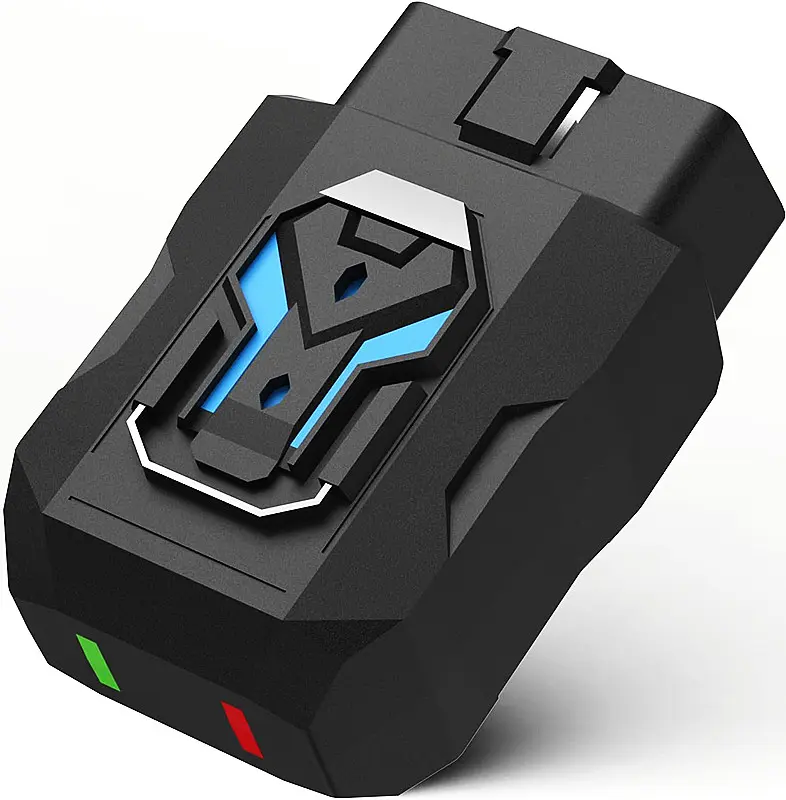
Auto re-arm version
Ropode AFM Disabler — Auto Re-Arm Option
Same principle, but it re-engages automatically at every start, so the protection is there every drive without a button press.
Buy on AmazonFrequently Asked Questions
How does Active Fuel Management work without damaging the cylinders?
During cylinder deactivation, the valves remain closed, trapping air inside the cylinder. Also, this air will compress and expand like a spring. Since no combustion occurs and no fuel enters, there is no risk of cylinder wall wash-down or abnormal component loading.
Does AFM use a separate hydraulic system?
No. It uses standard engine oil, which is controlled by solenoids in the valve lifter oil manifold. This is why oil condition is really important for this type of engines.
How fast does reactivation happen?
It takes less than a second. During this process, the ECU also manages spark and throttle to ensure a smooth transition so that the change is not felt as a lurch.