How Does AFM Work From the Driver's Seat?
How does AFM work when you are actually driving? Most explanations tend to jump straight into technical details like lifters and oil manifolds. Although this information is useful, it does not tell you the actual experience of your daily commute. For example, when the system engages, what you might notice, and why your truck behaves differently on the highway compared to city streets.
In this article, we will take the driver's-seat view. But if you need the component-level mechanics, you can refer to our companion article on how Active Fuel Management works internally.
When AFM Engages During Normal Driving
AFM waits for a specific set of conditions. And once you know them, you can predict its operating state accurately.
The engine must reach operating temperature. AFM does not engage during a cold start. Therefore, during the first few minutes of every drive, the engine always runs in eight-cylinder mode.
The load must be light. You need to maintain a steady speed on flat roads and control the throttle smoothly. Highway cruising at a constant speed of 65 mph is a textbook case.
Throttle position must be steady. If you frequently modulate the pedal, the system will be unable to intervene. That is why the system rarely deactivates in stop-and-go traffic despite the low speeds.
The transmission should be in an appropriate gear. Generally, a higher gear should be used at cruising speeds.
How Does AFM Work on a Typical Commute?
During a mixed commute, AFM may only engage for a small fraction of the trip. Cold start, city streets and traffic all cause the system to stop functioning. It only engages on highway stretches, but it may return back to eight-cylinder mode when there is a rolling grade or a lane change. This is why real-world fuel savings can be totally different between owners with same trucks.
What You Can Actually Feel
GM has put much effort into making the transition invisible. And for many drivers, it is indeed imperceptible. While others notice it clearly once they know what to look for.
The most commonly reported sensation is a subtle change in engine sound. In details, you can feel a slightly deeper or droning quality at steady cruise. Some owners also reported they can feel a faint vibration through the seat or steering wheel at specific speeds.
A few users also report a small hesitation when accelerating from four-cylinder mode, though the ECU has managed spark and throttle to smooth out the transition.
Exhaust modifications tend to make the transition much more obvious. Aftermarket systems often produce a pronounced drone in four-cylinder mode that the factory exhaust was designed to suppress. For this reason, owners who have installed exhausts often start to ask about AFM shortly afterwards.
How to See What AFM Is Doing
It is not reliable to rely on physical feelings. Here are two better methods.
On some GM vehicles, you can find a fuel mode indicator in the driver information centre, showing whether the vehicle is in V8 or V4 now. If the vehicle is equipped with this feature, it is the most direct way to confirm the mode.
The common diagnostic method is to use a scan tool. You just need to pair Bluetooth OBD-II reader with a live-data app, then you can check parameters such as Cylinder Deactivation Mode or AFM Status. If you watch it during steady highway cruising, you will see it switching between different states. In fact, this is also the only reliable way to confirm whether a disabler module is actually working.
These readers are not expensive, but they can answer a question that guesswork cannot.
How AFM Behaves When Towing
There is almost no change, and this surprises owners who have expected a disabler to improve their towing experience.
Towing means sustained load on the vehicle, and the sustained load keeps the ECU in eight-cylinder mode naturally. Although the deactivation may engage briefly on a downhill stretch or a flat run with a light trailer, it simply does not happen in most situations.
In practice, installing a disabler has almost no impact on how the truck tows. For owners who tow often and want to install a module, they usually want to prevent valve lifter failure, not to improve the driving experience under load.
AFM in Winter and on Short Trips
Cold weather will reduce the efficiency of AFM system a lot. The engine must reach operating temperature before deactivation is permitted, and this process takes longer during the winter.
When you drive short distances in cold weather, the engine may never get warm enough to deactivate at all. Therefore, for owners who mainly drive short trips in cold climates, they may find that AFM engages so rarely that its fuel benefit remains only theoretical.
There are pros and cons to this. If your driving habits rarely trigger AFM system, the lifter mechanism also undergoes fewer cycles. This is a reasonable argument for leaving a mostly-city truck alone.
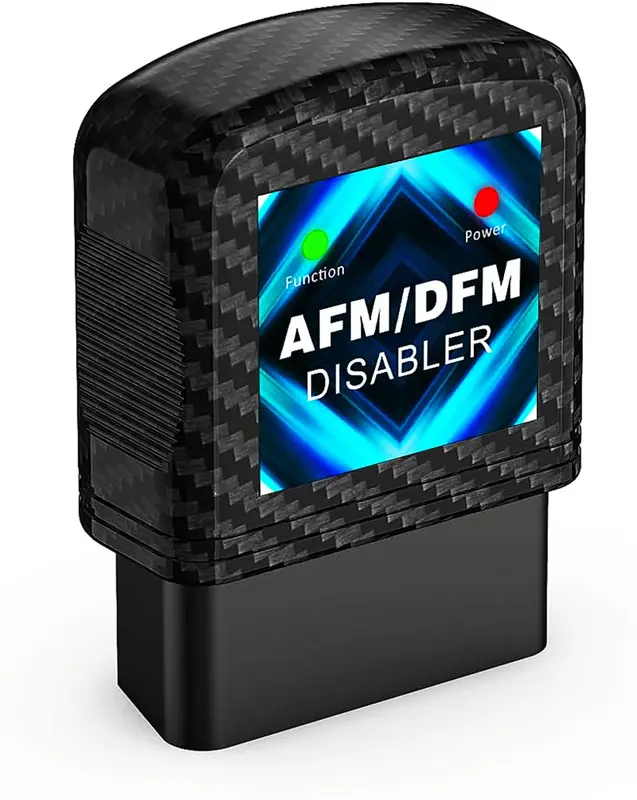
Keep it on eight cylinders
Ropode AFM DFM Disabler — 5.3L Daily Driver Pick
The plug-in option most owners start with: nothing flashed, nothing cut, and it unplugs in seconds if you change your mind.
Buy on AmazonWe may earn commission from links in this article, at no extra cost to you.
What Changes If You Disable It
The most consistent report from owners after installing a module is not an increase in power. In fact, the engine already made full power in eight-cylinder mode.
What has truly changed is consistency. Since the transitions stopped happening, whatever you did or did not notice about them disappeared, too. Many owners with aftermarket exhausts often report that the cruise drone has disappeared. Foe some people, this is the main reason for installing the module.
The cost is fuel. It is usually a reduction of one to two MPG on the highway and much less in town. Also, there is almost no impact when towing. In conclusion, whether that trade is worthwhile depends on your driving pattern and how much you pay attention to the lifter question.
Why Two Identical Trucks Report Different Results
Car owners frequently compare notes and find their experiences do not match at all. In fact, the explanation is almost always driving pattern rather than a difference in the vehicles.
For example, a truck that runs 40 miles on a flat interstate each day gives AFM constant opportunity. But for a truck used in cold weather for shuttling students and running errands, there is almost no opportunity to deactivate at all. Regardless of same engine and calibration, the amount of time spent in four-cylinder mode is totally different between the two conditions.
That variance impacts various aspects down the line. It explains why fuel savings estimates range so widely, why some owners notice transitions and others never notice, and why lifter failures appear at wildly different mileages.
It also means whether or not to disable the AFM is entirely up to the owner. For an owner whose truck deactivates for two hours a day, the situation is totally different from one whose truck deactivates for six minutes.
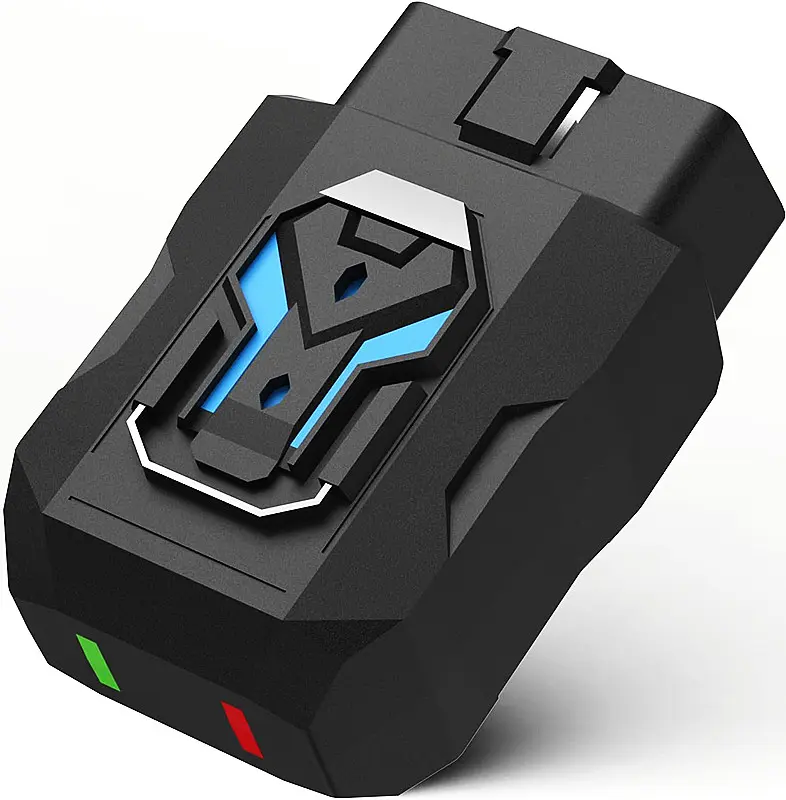
For short-trip drivers
Ropode AFM Disabler — Auto Re-Arm Option
Re-arms on its own at every start — the difference that matters most if your driving is the school-run, errands-and-back pattern described above.
Buy on AmazonFrequently Asked Questions
How does AFM work at highway speed?
Highway cruising is exactly where AFM engages. At this time, the engine has reached operating temperature. It is under a light and steady load, and in a high gear. The AFM usually remains active during high-speed driving on flat roads, but drops out on grades or during acceleration.
Why does my truck never seem to use AFM?
Short trips, cold weather, hilly terrain, city driving and towing can all reduce or fully eliminate deactivation. You can use a scan tool to confirm whether it is actually engaging.
Does AFM affect transmission shifting?
There is an indirect impact. Deactivation is coordinated with transmission behaviour during light-throttle driving. Some owners have reported the shift patterns feels more consistent after disabling the system.